

A Message from HEI's President and Chair of the Board
This past year marked a period of meaningful progress and measurable impact for HEI. The publication of eight new research reports from our foundational Environment and Health program is a testament to the long tradition of providing credible, independent science to government, industry, policymakers, and academia, allowing them to make the best decisions possible to improve the environment and public health.
HEI's Energy program also released a compelling portfolio of research reports on potential population exposures stemming from unconventional oil and gas development. In addition, the program hosted a series of educational exchanges on relevant energy research and data collection, including hosting a number of virtual and in-person meetings and discussions.
HEI's Global Initiatives program contributed on a global scale to a greater understanding of the health effects of air pollution. This year, the program hosted in-person workshops and webinars, co-hosted a Clean Air Forum in Nairobi, and released regional reports on East Africa and South Asia. We also established a new partnership with NCD Alliance and strengthened existing partnerships with UNICEF, continuing our focus on collaborative relationships. Through the release of the State of Global Air 2025 report, the program provided a comprehensive analysis of global data for air quality and health that will continue to have relevance and value around the world for years to come.
HEI continued its commitment to supporting and mentoring students and early-career professionals working and seeking careers in the environmental health sciences. Thanks to ongoing support from outside partners, we've continued to grow our awards programs, including our Jane Warren Award and our Summer Fellowship program.
This past year we hosted our Annual Conference in Austin, Texas. Over three days, more than 250 people attended our sessions, panels, and posters, and keynote remarks were given by Austin Mayor Kirk Watson.
As always, we are enormously grateful to our independent Research and Review committees, as well as our committees for Energy, Global Initiatives, and CHERI. These experts ensure that HEI's work is fully impartial and highly trusted by the scientific community, academia, policymakers, industry leaders, and other stakeholders. We would like to recognize the many researchers and research teams whose work is advancing knowledge and laying the foundation for future progress.
We also thank our vibrant national and global networks and partners, who amplify and apply this work so effectively to inform critical environmental health decisions. Finally, we extend our sincere appreciation to our sponsors in government and industry for their sustained support and for helping ensure that our work remains credible, independent, and impartial.
As we move forward under our Strategic Research Plan 2025–2030, we are well positioned to pursue new research opportunities and priorities that address the most pressing environmental and health challenges of our time. We remain steadfast in our belief that sound science must continue to serve as the foundation for informed decision-making and we are grateful to all who help make that possible.

Elena Craft
HEI President and CEO
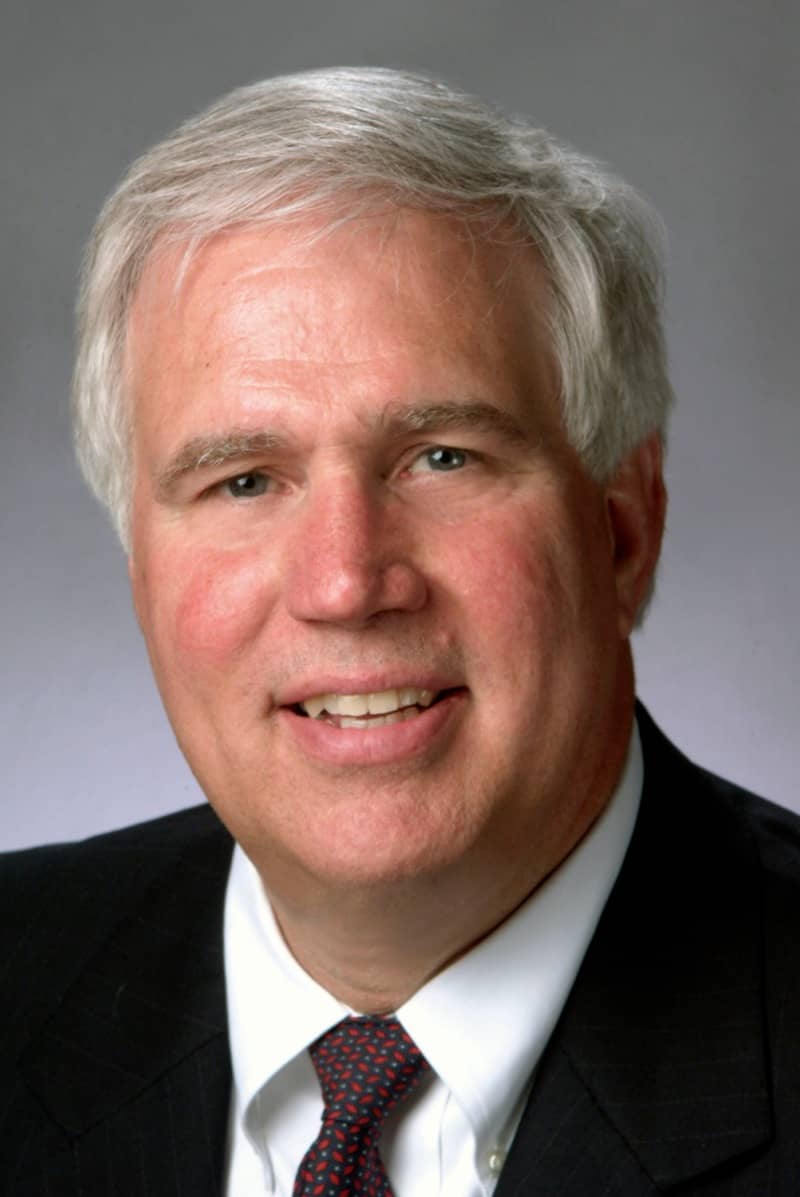
Richard A. Meserve
Chair, HEI Board of Directors
Report Overview and 2025 Highlights
Credible science is vital to protecting public health. For over 45 years, the Health Effects Institute (HEI) has provided independent and impartial science to inform decisions that foster a healthier environment for all. We bring government, industry, decision-makers, and scientists together to translate research into real-world solutions.
Some Highlights from 2025
Environment and Health
Impartial science driving solutions that lead to cleaner air and longer, healthier lives
As the United States undergoes major transitions in transportation and energy, new technologies and fuels bring both opportunities and potential health risks. Through these changes, HEI remains committed to ensuring that the best possible science is available to guide health-protective decisions. All these developments amplify the urgency and importance of HEI's Environment and Health program, which assesses environmental risks to human health in a changing world.
Assessing How Actions Impact Public Health
Independent, credible science can drive solutions that lead to cleaner air and longer, healthier lives. As decision-makers consider air quality interventions, it is critical to understand the potential effects on health. HEI's accountability studies assess the outcomes of these actions, yielding lessons that can inform future efforts to improve air quality and deliver public health benefits.
In the past year, several accountability studies demonstrated how changing policies, regulations, and circumstances can affect air quality and health, even when they are not intended to do so. For example, a study led by Kai Chen of the Yale School of Public Health showed that in early 2020, air pollution levels dropped during COVID-19 lockdowns, an unintended consequence of constraining human activity and mobility. In another study, researchers led by Perry Hystad of Oregon State University found that short-term, localized measures aimed at curbing traffic congestion appear to have had little impact in terms of preventing adverse birth outcomes. However, they also found that long-term national tailpipe emissions regulations have likely helped reduce adverse birth outcomes, adding to the large body of evidence in support of such regulations.
Accountability research has long stood as a hallmark of HEI's unique, unbiased research approach, and is an area of increasing interest to a variety of stakeholders. As technologies and fuels continue to change, the vehicle fleet turns over, and mobility transforms, HEI will continue its efforts to support the most relevant research to inform decision-making and meet the current moment.
Strengthening Scientific Methods to Accelerate Insights
Untangling the effects of air pollution on health is a complex undertaking. How can we know that we are collecting the right data and interpreting it correctly? HEI supports studies that critically assess the strength of the evidence, refine scientific methods, and optimize the feasibility, cost-effectiveness, and reliability of research.
Stronger methods lead to better science. For example, Joseph Antonelli of the University of Florida and his team addressed common challenges that researchers face when assessing the health effects of exposure to air pollution mixtures. They provided new statistical approaches to support causal inference (determining the cause-and-effect relationship between different variables), address bias, and enhance exposure assessment in future air pollution studies.
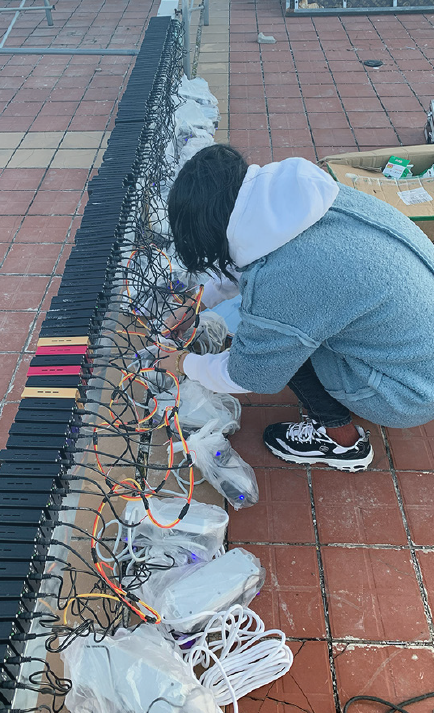
Refining scientific methods can also help us get more bang for our research buck. For example, one dilemma scientists face is determining how much data are needed to support sound decisions. More measurements can boost data quality, but can also result in increased costs. What measurement strategies can give us the data we need to make decisions, while limiting costs and logistical complexity? Lianne Sheppard of the University of Washington and colleagues compared different approaches to come up with practical guidance for researchers. For example, for mobile monitoring campaigns, the team reports that taking samples during all days of the week, most hours of the day, and at least two seasons is important to optimize exposure assessment. In another study, researchers led by Kees de Hoogh of the Swiss Tropical and Public Health Institute examined the importance of accounting for people's daily movements when assessing pollution exposures. They found that residential-only and mobility-enhanced pollution exposure estimates were highly correlated, suggesting that estimating exposure based on where people live, which is a simpler approach, can be a reasonable choice for many studies.
Children boarding a school bus

Energy
Delivering high-quality impartial science on exposures and health in the face of evolving energy systems
Rising global energy demand requires a strategic approach to balancing energy security, economic growth, and public health. In the face of complex and evolving energy systems, society stands to benefit from research that pinpoints how emerging energy technologies can enhance health while minimizing risks. To this end, HEI's Energy research program delivers high-quality, impartial science on the potential human exposures and potential health benefits and drawbacks associated with energy production and various energy technologies.
During the past year, the HEI Energy program published its first set of research reports, contributing to the scientific understanding of the nature, extent, and frequency of potential population exposures to air emissions, water quality changes, and noise from oil and gas operations across several US regions.
Capturing Cumulative Impacts
Social, environmental, and economic aspects of our lives have multiple effects — both good and bad — that can combine and accumulate over a person's lifetime. Considering these factors can help guide policy decisions intended to maximize beneficial exposures and minimize adverse ones. Capturing the full spectrum of factors that can affect human health — known as cumulative impact assessment — is a daunting undertaking.
A special report by HEI Energy, Roadmap to Health: Assessing Adverse and Beneficial Environmental, Social, and Economic Cumulative Exposures, offers practical approaches to make it more feasible to conduct cumulative impact assessments in a timely manner. The report and its accompanying checklist mark an important step toward realizing the promise of cumulative impact assessment for decision-making. HEI anticipates using the roadmap to assess cumulative exposures associated with data centers.
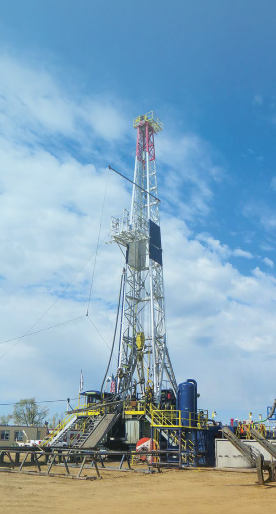
Oil and Gas Development in America's Communities
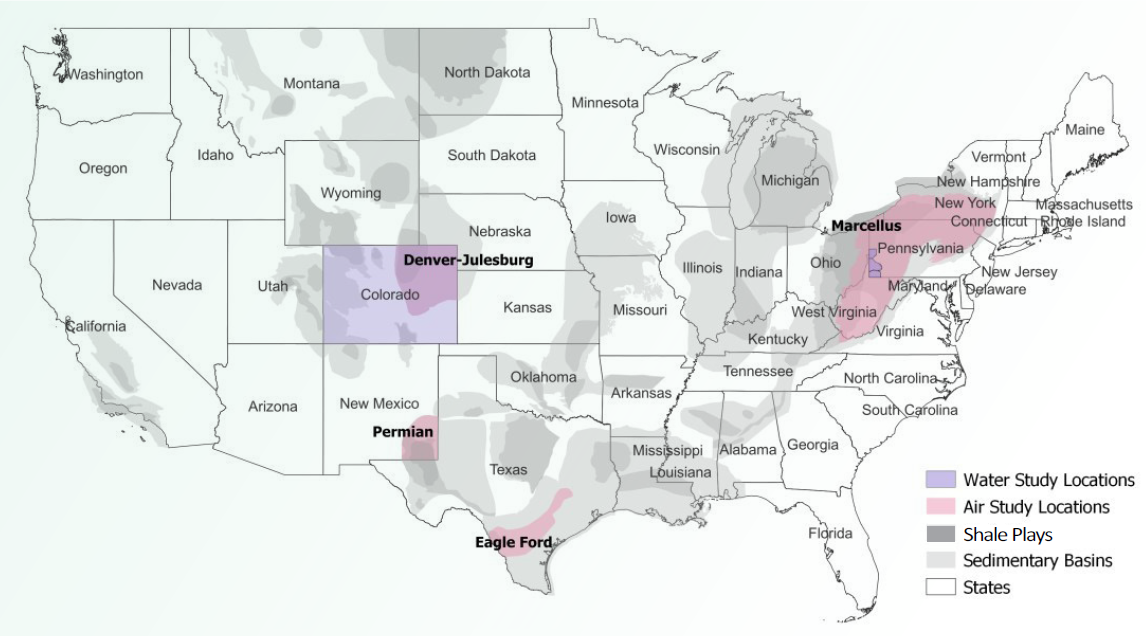
The Tracking Community Exposures and Releases (TRACER) Collaboration is a flagship research initiative of HEI Energy to advance understanding of how emissions from oil and gas development can result in population exposures of concern for health. Through the collaboration, researchers are measuring air pollution and noise exposures across multiple oil and gas regions of the United States and developing a new model to predict chemical emissions and population exposures. Findings from the TRACER Collaboration were featured in two webinar discussions from HEI's Energy and Health series, and HEI also created a Story Map describing the collaboration for a general audience.
Research projects within this program are generating vital insights for the oil and gas industry; government bodies at the local, state, and national levels; the scientific community; and people living near oil and gas extraction and processing sites. In one study published in 2025, Jeffrey L. Collett, Jr. of Colorado State University and colleagues collected air quality and noise measurements at operations in Colorado, yielding insights on the points in the extraction process when the largest emissions occur. Their findings, shared in a public meeting attended by representatives from industry, government, academia, and local community groups, suggest that Colorado's 2,000-foot setback distance helps limit exposure levels of health concern for people who live near extraction sites. The model they developed to estimate emissions of hazardous air pollutants can be used to inform oil and gas operational practices and target interventions to reduce air quality impacts of oil and gas development.
To inform future research planning, HEI Energy reviews the scientific literature at its online Literature Hub, in research briefs, and in peer-reviewed publications. HEI undertook one such review in response to growing interest in using produced water from oil and gas production for purposes such as crop irrigation and road treatments. The report, produced in collaboration with scientists from the US Geological Survey, synthesizes over 230 publications to illustrate the current state of knowledge and identify gaps.
Meredith Franklin of the University of Toronto led another TRACER Collaboration study, focusing on distinguishing oil and gas activities from other sources of noise and airborne chemicals in Texas, New Mexico, and Colorado. The results document specific sources of pollutant emission spikes and show that oil and gas activity represents the dominant source of air pollution around the study sites. To our knowledge, this study represents the most detailed and extensive air quality investigation undertaken to date around New Mexico oil and gas operations. Lea Hildebrandt Ruiz of the University of Texas at Austin led a third study, which assesses air pollutant and noise emissions in Texas and expands the TRACER model to the Marcellus region. The researchers shared their initial findings on activities in the Eagle Ford region of Texas in a virtual public meeting, describing how the concentration of air pollutants from oil and gas wells in the region varies by time of day and wind direction.
Map of study locations
Global Initiatives
Applying science to understand air pollution and health while strengthening capacity around the world
Air pollution is the world's second leading risk factor for early death, representing a global threat with far-reaching health consequences as well as social and economic impacts. HEI's Global Initiatives apply science to better understand the health impacts of air pollution in projects around the world. Working closely with local and regional partners, these efforts aim to inform global policy action and strengthen scientific capacity to complement ongoing in-country activities.
State of Global Air Report
The State of Global Air 2025 report, published in partnership with the Institute for Health Metrics and Evaluation and the NCD Alliance, describes air pollution's role in contributing to about 1 in 8 deaths worldwide in 2023, with 90% of these deaths occurring in low- and middle-income countries. In addition to illuminating important drivers behind this ongoing health threat, the report spotlights success stories illustrating how countries are taking tangible steps to curb air pollution and generating tangible benefits for their populations. For the first time, the 2025 report included the impact of air pollution on dementia using a first-of-its-kind global dataset, in addition to impacts on other noncommunicable diseases, including respiratory and cardiovascular diseases, and impacts on neonatal and children's health.
Children playing soccer (Photo from the State of Global Air Report 2025)

Air Pollution in East Africa
HEI's initiatives in East Africa aim to communicate the health impacts of air pollution at the local level and strengthen regional capacity to integrate health as a pillar of air quality decision-making.
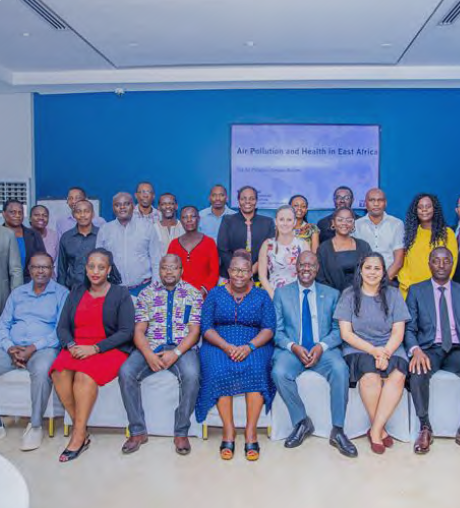
To support these goals and guide future research activities, HEI conducted a scoping review, Health Effects of Air Pollution in East Africa: Current Evidence and Priorities for Future Action, which compiles available evidence from the region with a view to inform policy decisions. Building upon this report, HEI hosted a workshop in Kampala, Uganda, to identify priority research areas and near- and medium-term goals for research and action in the region.
HEI collaborates with the Africa Clean Air Network to help bridge the gap between air quality science and policy in Africa. The network launched a renewed vision for action at the third annual CLEAN-Air Forum, held in July 2025 in Nairobi, Kenya. As a convening partner for the Forum, HEI worked with the organizing team to bring together nearly 400 experts and policymakers to advance collaborations and multiregional partnerships aimed at delivering scalable and evidence-driven clean air solutions for African cities.
Air Pollution in South Asia
As Asia has continued to suffer some of the highest burdens from air pollution, the continent has seen a growing public demand for action to improve air quality. HEI has led several research initiatives aimed at elucidating the drivers of air pollution in the region, calling attention to pollution problems as well as successful solutions.
A special report of the State of Global Air initiative describes the ongoing challenges outdoor and household air pollution poses in Central, South, and Southeast Asia. It also lays out a case for stronger regional coordination and knowledge exchange as well as national-level approaches for effective action to improve air quality.
SUPPORTING REGIONAL COLLABORATION
HEI collaborates with the Africa Clean Air Network to help bridge the gap between air quality science and policy in Africa. The network launched a renewed vision for action at the third annual CLEANAir Forum, held in July 2025 in Nairobi, Kenya. As a convening partner for the Forum, HEI worked with the organizing team to bring together nearly 400 experts and policymakers to advance collaborations and multiregional partnerships aimed at delivering scalable and evidence-driven clean air solutions for African cities.
Locally led, on-the-ground research is crucial to advancing efforts to address the drivers of pollution and its related health burden in ways that are responsive to the needs and priorities of local populations. In 2025, HEI awarded two pilot research grants to support one-year projects focused on air pollution and health in South Asia. By supporting early-career local researchers, HEI seeks to not only advance the research aims of their projects but also strengthen research expertise.
In India, Vigneswari Aravindalochanan of the Sri Ramachandra Institute of Higher Education and Research will study the impact of early-life exposure to fine particle air pollution on childhood stunting in rural communities.
In Nepal, Akina Shrestha of the Kathmandu University School of Medical Sciences will deploy a low-cost sensor network to monitor air quality in rural areas and share the data with the public.
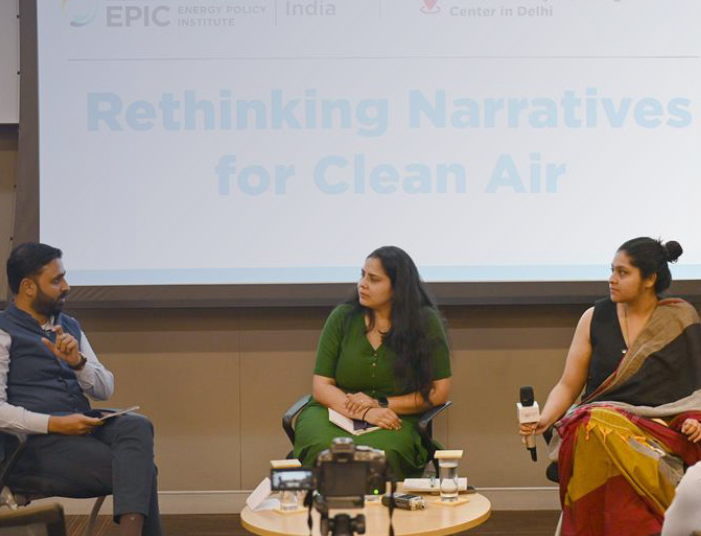
Panel discussion on "Rethinking Narratives for Clean Air" at The University of Chicago Center Delhi, India (Photo: The University of Chicago Center, Delhi)
Facilitating Global Conversations
HEI's Science on the 7th series brings together experts to discuss air quality and health in a live conversation. Interviews are livestreamed on the 7th of each month and recorded for future viewing, providing audiences with a range of perspectives and experiences on emerging research and issues. In 2025, Science on the 7th hosted 11 conversations with 15 guests from 10 different countries and covered topics ranging from AI and satellite technologies to the lived experiences of communities affected by air pollution.
Sharing Knowledge, Expanding Collaboration
Convening colleagues and thought leaders from government, industry, and academia
The 2026 HEI Annual Conference will be held April 26–28 in Chicago, Illinois. Sessions will feature research and discussions on air quality policy successes, air pollution's role in neurodegenerative disease, strategies for incorporating remote observations into air pollution research, key questions around improving efficiency for freight and truck transportation, and more.
Attendees at the 2025 HEI Annual Conference

A Legacy of Enduring Impact
The impacts of HEI's reports stretch across decades in policy decisions, technology advances, and research priorities
Several milestones celebrated in 2025 remind us that the release of an HEI report is not an end, but a beginning. While the rigorous process of collecting, assessing, vetting, and interpreting the evidence might be over when a report is published, this marks only the first step in the process of putting that evidence to use. The impacts of HEI's Environment and Health reports stretch across decades and are seen in policy decisions, technology advances, research directions, and a strong workforce of talented scientists dedicated to advancing environmental health for the benefit of all.
Reanalysis Report 25th Anniversary
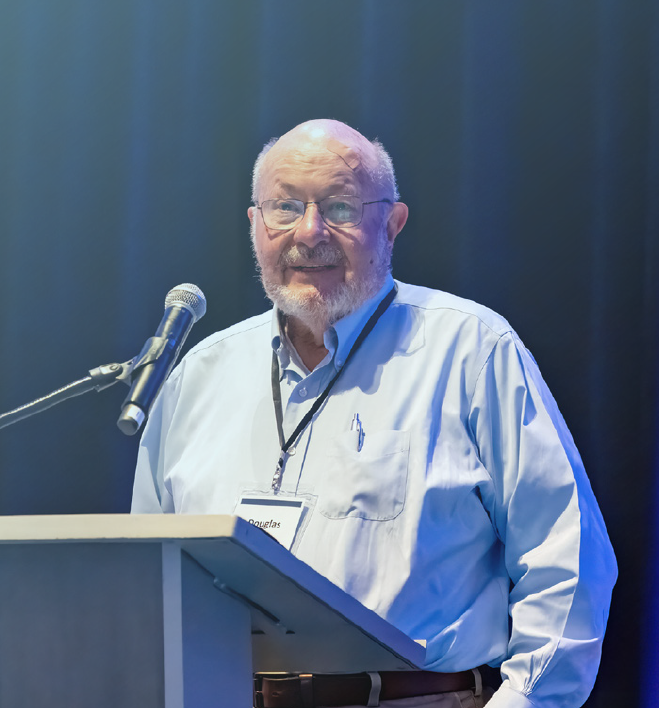
Douglas Dockery delivering his talk "Reflections on HEI Reanalysis Project 25 Years Later" at our annual conference
Traffic Report 15th Anniversary
Traffic-Related Air Pollution: A Critical Review of the Literature on Emissions, Exposure, and Health Effects, a special report issued in 2010, provided the most comprehensive and systematic review to date of the scientific literature on the potential health effects of exposure to vehicle emissions. The report outlined strong evidence for a causal relationship between exposure to traffic-related air pollution and exacerbation of asthma in children, as well as evidence suggesting a causal relationship between this type of air pollution and several other adverse health outcomes in both children and adults. The frequently cited review represented a seminal study and was followed by another review of traffic-related air pollution and health literature completed in 2022.
Fostering the Next Generation
I feel much more capable and confident in my ability to conduct research. I was able to learn how to pivot quickly, strengthen my organizational skills, and become a stronger communicator this summer. My networking and coding skills have also improved tremendously. I am very thankful I was able to connect with numerous graduate students, professors, and EHS professionals. — 2025 Fellow
Since our founding, HEI has viewed cultivating the next generation of talented researchers as critical to our mission of providing impartial science for a healthier environment. Solid science depends upon the curiosity, expertise, and integrity of the researchers who carry out the investigations that will yield needed insights. HEI's workforce development programs reflect this commitment and represent an important building block for the future of our field. In 2025, HEI was proud to support nine Summer Fellows and five Jane Warren Award recipients.
Summer Fellows are highly qualified undergraduate students who pursue a tailored environmental health project with a research mentor during a 10-week fellowship experience. HEI runs the program in partnership with the International Society of Exposure Science and the International Society for Environmental Epidemiology.
The 2025 program was supported by the American Chemistry Council and individual donations.
2025 Fellows

Olivia Alpizar
University of Massachusetts Amherst

Sulaiman-Mathew-Wilson
Howard University

Thet Mon Kyaw
University of Southern California

Valeria Martinez-Gutierrez
Syracuse University

Peyton Morgan
UNC Chapel Hill

Elliot Lazarova-Weng
UC Santa Cruz

Autumn Taliaferrow
Vassar College
Ahmed Shah
University of Rochester

Kayla Portillo
Boston University

Alejandro Jimenez
University of California, Los Angeles

Chelsea Lam
University of California, Berkeley

Vivian McNally
California Polytechnic San Luis Obispo

Melissa Retana
Wellesley College

Ava Grace Carfaro
University of North Carolina, Chapel Hill

Marta Symkowick
Williams College

Avery Matthews
University of North Carolina, Chapel Hill

Julia Godinez
San Diego State University

Diana Abigail Cantoran-Perez
University of California, Berkeley

Alyssa Aminata Kamara
University at Albany

Andrew Gallego
Boston University

Thomas Elijah Ealey
Savannah State University

Kai Kibilko
Brandeis University

Kyara Ralliford
Columbia University

Lawrence Tran
University of California, Los Angeles
Jane Warren Award
Jane Warren Award recipients are exemplary graduate students and postdocs in the environmental health field who receive funding to present their research as part of HEI's Annual Conference.

Albert Kyi
The University of Texas at Austin

Rebecca Sugrue
University of California, San Francisco

Chirag Manchanda
University of California, Berkeley

Shihao Zhai
The University of Texas at Austin

Kevin Schichlein
University of North Carolina at Chapel Hill
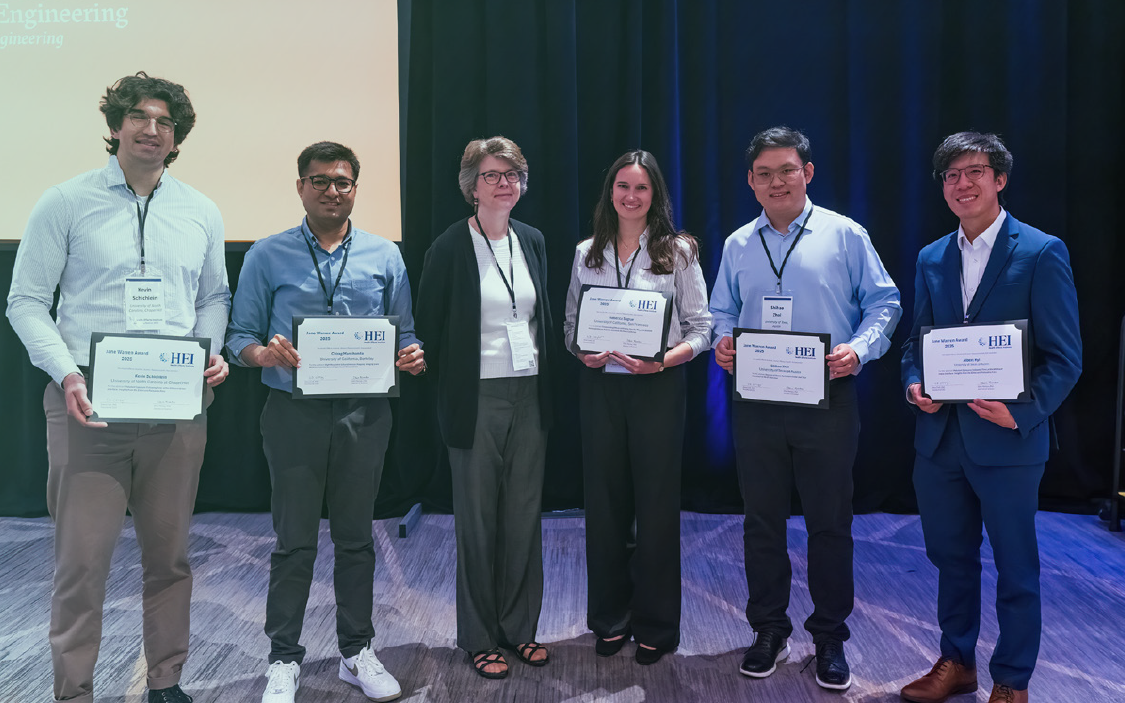
2025 Jane Warren awardees with HEI's Director of Science, Ellen Mantus
A Look Ahead
Building momentum to advance research for clean air and better health
2025 saw the launch of a new Strategic Research Plan that renews HEI's vision for impartial science and sets a course for each of our program areas for 2025–2030. At the one-year mark, the priorities established in the plan are well underway, with new and continuing research programs supporting high-quality science to inform policy decisions. In the coming year, HEI's three program areas — Environment and Health, Energy, and Global Initiatives — will build upon this momentum and advance research priorities to achieve a future of cleaner air and better health.
New research efforts will be starting in 2026 under two recent Requests for Applications. Studies funded under Advancing Satellite-Derived Air Quality Data and Approaches for Use in Health Studies (RFA 25-1) will quantify uncertainties in satellite remote sensing data and discuss their implications for use in exposure, epidemiological, and health assessment research. A promising early-career researcher selected for funding under the Walter A. Rosenblith New Investigator Award (RFA 25-2) will receive support for a project aligned with HEI's research interests lasting up to three years.
Sponsors and Supporters
HEI thanks all our sponsors and supporters for helping us achieve our mission of providing impartial science to inform decisions that foster a healthier environment for all.
HEI Research Program Sponsors
- US Environmental Protection Agency
- BMW of North America, LLC
- Cummins Inc.
- Daimler North America Corporation
- Detroit Diesel Corporation
- Ford Motor Company
- General Motors Company
- Hino Motors, Ltd.
- American Honda Motor Company, Inc.
- Hyundai Motor North America
- Isuzu Motors, Ltd.
- Jaguar Land Rover North
- Mitsubishi Motors Corporation
- Nissan Motor Company, Ltd.
- North American Subaru, Inc.
- Stellantis
- Toyota Motor Corporation
- Volkswagen of America, Inc.
- Volvo Cars of North America, LLC
- Volvo Group Trucks
Other Supporters
- American Petroleum Institute
- ExxonMobil
- Breakthrough Energy
HEI Summer Fellowship Program
- American Chemistry Council
- Burroughs Wellcome Fund
- Individual Donors
HEI Global Initiatives
- Clean Air Fund
- UNICEF
- Coefficient Giving
- World Bank
Peer Reviewers
Thank You to Our Peer Reviewers in 2025
We would like to thank all the reviewers who offered their time and expertise to HEI and provided thoughtful and high-quality comments and feedback on our various projects. We also thank our quality assurance audit teams, our Research Committee, Review Committee, Energy Research Committee, Energy Review Committee, Global Initiatives Oversight Committee, CHERI Advisory Council, CHERI Research Committee, the Panel on Heavy Duty Diesel Fleet Turnover and the Exposure Studies Review Panel. We would not succeed without the help of all these individuals.
Environment and Health Program
Antony Chen, University of Nevada, Las Vegas
Brent Coull, Harvard T.H. Chan School of Public Health
Colleen Reid, University of Colorado Boulder
Ellen Considine, University of Colorado Boulder
Erik Lebret, National Institute for Public Health and the Environment / Utrecht University, Netherlands
Gaëlle Uzu, Institute of Environmental Geosciences, France
Giulia Grande, Karolinska Institutet, Sweden
Grant Williamson, University of Tasmania, Australia
Haotian Zheng, Stony Brook University
Heejung Jung, University of California, Riverside
Jeff Pierce, Colorado State University
Jeffrey Geddes, Boston University
John Balmes, University of California, San Francisco
Jun Wu, University of California, Irvine
Kai Chen, Yale University
Lena Palmberg, Karolinska Institutet, Sweden
Melinda Power, George Washington University
Michele Peruzzi, University of Michigan
Patrick Reddy, P. Reddy Research
Peter James, University of California, Davis
Peter Adams, Carnegie Mellon University
Sean Mueller, Boston University
Peter James, University of California, Davis
Peter Adams, Carnegie Mellon University
Peter James, University of California, Davis
Peter Adams, Carnegie Mellon University
Sean Mueller, Boston University
Sheryl Magzamen, Colorado State University
Stacey Alexeeff, Kaiser Permanente Division of Research
Stephanie Cleland, Simon Fraser University / Vancouver Coastal Health, Canada
Tamara Schikowski, IUF-Leibniz Research Institute of Environmental Medicine, Germany
Yang Liu, Emory University
Yunyao Li, University of Texas at Austin
Global Initiatives
Ajay Pillarisetti, University of Berkeley, California
Aneesa Vanker, Red Cross War Memorial Children's Hospital, University of Cape Town, South Africa
Burcin Ikiz, Stanford University
Deo Okure, AirQo, Uganda
Ekaterina Perfilyeva, UN Environment Programme
Francesco Forastiere, Imperial College London, UK
Francis Pope, University of Birmingham, UK
Juliette Laurent, Climate and Clean Air Coalition, France
Lynn Atuyambe, Makerere University, Uganda
Liz Arnanz, NCD Alliance
Nina Renshaw, Clean Air Fund, UK
Rachael Stanton, NCD Alliance
Sarath Guttikunda, UrbanEmissions.Info, India
Selina Amoah, Ghana Environment Protection Authority, Ghana
Shubhi Verma, Council on Energy, Environment and Water, India
Sunil Dahiya, EnviroCatalysts, India
Tiantian Li, Chinese Center for Disease Control and Prevention, China
Yasmine Yau, Clean Air Fund, UK
Zorana Andersen, University of Copenhagen, Denmark
Energy Program
Ammie Bachman, ExxonMobil Biomedical Sciences
Ben Linhoff, U.S. Geological Survey
Bo Li, Washington University in St. Louis
Chris McLinden, Environment and Climate Change Canada, Canada
Cory Zigler, Brown University
Daniel Rossi-Keen, RiverWise
Derek King, Minnesota Pollution Control Agency
Holly Michael, University of Delaware
Jason West, University of North Carolina at Chapel Hill
Jean-Philippe Nicot, University of Texas at Austin
Jill Blakley, University of Saskatchewan, Canada
Mary D. Willis, Boston University
Mira Olson, Drexel University
Nicole Deziel, Yale University
Nicolle Tulve, U.S. Environmental Protection Agency
Simona Perry, c.a.s.e. Consulting Services LLC
Stephanie Malin, Colorado State University
Tom Moore, Regional Air Quality Council
Tor Oiamo, Toronto Metropolitan University, Canada
Uni Blake, American Petroleum Institute
Wei Peng, Pennsylvania State University
Financial Summary 2024–2025
Statements of Financial Position
| June 30, 2025 | June 30, 2024 | |||
|---|---|---|---|---|
| Assets | ||||
| Cash and cash equivalents | $2,436,320 | $2,398,811 | ||
| Restricted cash | 148,066 | 148,009 | ||
| Investments | 6,476,527 | 3,491,740 | ||
| Contributions receivable | 758,233 | 843,086 | ||
| Unbilled incurred costs on grants | – | 6,427,196 | ||
| Prepaid expenses | 122,590 | 72,853 | ||
| Office equipment, office furniture and fixtures, and leasehold improvements, net | 17,334 | 22,288 | ||
| Operating lease right-of-use assets | 201,488 | 591,659 | ||
| Finance lease right-of-use assets | 6,779 | 16,947 | ||
| Total Assets | $10,167,337 | $14,012,589 |
| Liabilities and Net Assets | ||||
|---|---|---|---|---|
| Liabilities: | ||||
| Contracted research payables | $1,957,551 | $1,393,071 | ||
| Accrued contracted research | 1,190,096 | 2,271,638 | ||
| Deferred revenue | 260,823 | 309,084 | ||
| Other accounts payable and accruals | 634,025 | 964,165 | ||
| Operating lease obligations | 234,092 | 682,510 | ||
| Finance lease obligations | 7,068 | 17,425 | ||
| Total liabilities | 4,283,655 | 5,637,893 | ||
| Net Assets: | ||||
| Without donor restrictions | 2,085,944 | 1,979,699 | ||
| With donor restrictions | 3,797,738 | 6,394,997 | ||
| Total net assets | 5,883,682 | 8,374,696 | ||
| Total Liabilities and Net Assets | $10,167,337 | $14,012,589 |
Statement of Activities
| Year Ended June 30, 2025 | Year Ended June 30, 2024 | |||
|---|---|---|---|---|
| Revenues and support: | ||||
| EPA grants for the Health Effects of Air Pollution Program | $2,223,301 | $4,304,445 | ||
| EPA contracts for Energy Research | 5,140,727 | 2,380,844 | ||
| Other industry contributions | 5,250,886 | 5,269,284 | ||
| Other nonfederal grant and contract revenue | 479,828 | 870,345 | ||
| Other revenues | 157,326 | 144,033 | ||
| Total revenues and support | $13,252,068 | $12,968,951 | ||
| Expenses: | ||||
| Research programs: | ||||
| Research studies | 4,820,307 | 5,206,353 | ||
| Research planning and study selection | 816,108 | 1,254,870 | ||
| Scientific study management | 320,416 | 380,359 | ||
| Scientific study review | 403,386 | 478,353 | ||
| Scientific publication and communication | 2,148,148 | 1,520,676 | ||
| 8,508,365 | 8,840,611 | |||
| Special scientific projects: | ||||
| Energy research | 4,424,878 | 3,176,980 | ||
| Global health science | 876,848 | 1,056,042 | ||
| 5,301,726 | 4,118,982 | |||
| Total research and scientific expenses | 13,810,091 | 13,073,633 | ||
| Administration | 1,932,991 | 2,079,794 | ||
| Total expenses | 15,743,082 | 15,153,427 | ||
| Net decrease in net assets | (2,491,014) | (2,184,476) | ||
| Net assets at beginning of year | 8,374,696 | 10,559,172 | ||
| Net assets at end of year | $5,883,682 | $8,374,696 |
The HEI Financial Statement and the CBIZ CPAs P.C. Auditors' Report may be obtained by contacting Jacqueline C. Rutledge.